International Voices in Digital Storytelling Education

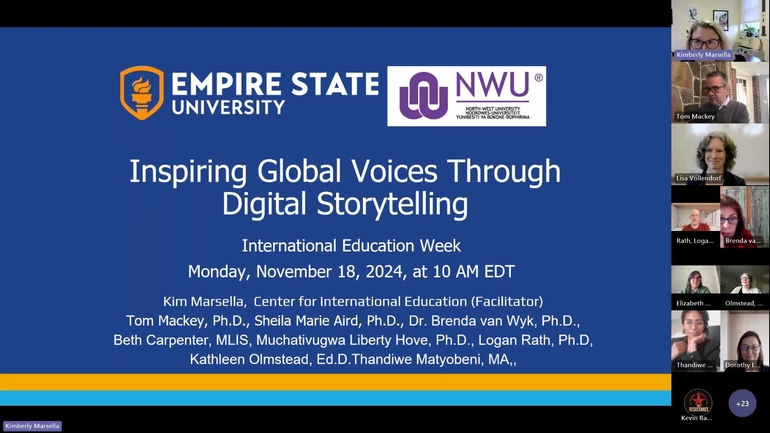
Empire State University, USA, and North-West University, South Africa, facilitated an international conversation Inspiring Global Voices Through Digital Storytelling. This virtual event highlighted several authors who contributed to the book Teaching Digital Storytelling Inspiring Voices Through Online Narratives by Drs. Sheila Aird and Tom Mackey for Rowman & Littlefield.

This engaging conversation brought together thought leaders from South Africa and the United States. They explored how digital storytelling empowers learners. It also fosters intercultural connections. Each author discussed their chapter with a particular focus on metaliteracy. They then engaged in an interactive conversation about the transformative role of digital storytelling in education.

Opening remarks were provided by Empire State University President Lisa Vollendorf, Ph.D. In addition, Prof Dorothy Laubscher also contributed. She is the UNESCO Chair on Multimodal Learning and OER and Associate Professor: Self-Directed Learning, Research Unit Self-Directed Learning, Potchefstroom Campus. 
Inspiring Global Voices Through Digital Storytelling

The panel participants for this event included:

  • Sheila Marie Aird, Ph.D. and Tom Mackey, Ph.D., from Empire State University will introduce their chapter Metaliteracy and Global Digital Storytelling: Building Shared Learning Communities.
  • Dr. Brenda van Wyk, Ph.D., from the University of Pretoria, South Africa will discuss her chapter Digital Storytelling and Cognitive Justice in Academic Information Services in Southern Africa – A Story Waiting to be Discovered.
  • Beth Carpenter, MLIS, from the State University of New York (SUNY) at Buffalo will explore her chapter The Metaliteracy of Memes: Having Students Track the Flow of Information.
  • Muchativugwa Liberty Hove, Ph.D., from North-West University, South Africa will discuss his chapter Voicing and Agency Through Autoethnography.
  • Logan Rath, Ph.D. and Kathleen Olmstead, Ed.D., from SUNY Brockport will introduce their chapter “It Was Awesome. No One was Telling Us What We Had to Write!”: Empowering Young Writers Through Digital Book Making.
  • Thandiwe Matyobeni, MA, from Rhodes University, South Africa will discuss his chapter Reflections on Digital Storytelling as a Learner-centred Approach to Teaching and Learning in Higher Education Classrooms.
Register for Digital Storytelling Panel Discussion on Nov 18!

Register today for an engaging conversation with a panel of experts on Monday, November 18, 2024, at 10 AM ET, celebrating the publication of Teaching Digital Storytelling: Inspiring Voices Through Online Narratives by Drs. Sheila Marie Aird and Tom Mackey.

This event, co-hosted by North-West University, South Africa, and Empire State University, USA, will spotlight several authors who contributed to the book recently published by Rowman & Littlefield. They will share their insights and discuss the impact of digital storytelling in global education.

As part of International Education Week (November 18-22), this event will bring together thought leaders from South Africa and the United States to explore how digital storytelling empowers learners and fosters intercultural connections. With a focus on metaliteracy, each author will introduce their chapter, followed by an interactive conversation about the transformative role of digital storytelling in education.

SUNY Empire State University President Lisa Vollendorf, Ph.D. will share a welcome and Prof Dorothy Laubscher, UNESCO Chair on Multimodal Learning and OER, Associate Professor: Self-Directed Learning, Research Unit Self-Directed Learning, Potchefstroom Campus will provide opening remarks. 

Panel Participants:

  • Sheila Marie Aird, Ph.D. and Tom Mackey, Ph.D., from Empire State University will introduce their chapter Metaliteracy and Global Digital Storytelling: Building Shared Learning Communities.
  • Dr. Brenda van Wyk, Ph.D., from the University of Pretoria, South Africa will discuss her chapter Digital Storytelling and Cognitive Justice in Academic Information Services in Southern Africa – A Story Waiting to be Discovered.
  • Beth Carpenter, MLIS, from the State University of New York (SUNY) at Buffalo will explore her chapter The Metaliteracy of Memes: Having Students Track the Flow of Information.
  • Muchativugwa Liberty Hove, Ph.D., from North-West University, South Africa will discuss his chapter Voicing and Agency Through Autoethnography.
  • Logan Rath, Ph.D. and Kathleen Olmstead, Ed.D., from SUNY Brockport will introduce their chapter “It Was Awesome. No One was Telling Us What We Had to Write!”: Empowering Young Writers Through Digital Book Making.
  • Thandiwe Matyobeni, MA, from Rhodes University, South Africa will discuss his chapter Reflections on Digital Storytelling as a Learner-centred Approach to Teaching and Learning in Higher Education Classrooms.

Don’t miss this exciting opportunity to join the conversation and discover how digital storytelling can inspire and connect voices around the world! 
Register here

Exploring Digital Storytelling in Education with Tea for Teaching Podcast

Drs. Sheila Aird and Tom Mackey share insights about digital storytelling on the latest Tea for Teaching podcast. They discuss their book Teaching Digital Storytelling: Inspiring Voices Through Online Narratives.

The co-hosts of this program are John Kane and Rebecca Mushtare. They are from SUNY Oswego and ask a wide range of questions about the book. They also inquired about the Digital Storytelling course at Empire State University that inspired this edited volume.

Digital Storytelling is part of the innovative BA and BS Digital Media Arts program at SUNY Empire. Aird and Mackey teach it as a virtual exchange, connecting students from the United States and Prague.

The podcast features a transcript of the conversation and show notes as well.

Featured Chapter: Poetic Ethnography as Digital Storytelling

By Dr. Kimmika L. H. Williams-Witherspoon

In Anthropology, Theater, performance and Higher Education, one of the legacies of the Covid-19 pandemic was the expanded use of  both fieldwork and virtual performance outcomes to meet the wider pedagogical needs of educational programs. student success, and distribution of research data. The pandemic and its aftermath forced so many of us to rethink what we teach and how we teach and I was fortunate, as an anthropologist teaching in a theater department, “teaching poetic ethnography and ethnographic field research methods that… [resulted] in the creation of global narratives [and] supports and encourages diverse voices” (Williams-Witherspoon, 65). This chapter, critiques the digital storytelling techniques that transformed the Poetic Ethnography course final class projects (2020-2022) that incorporated community engagement strategies, field research and ethnographic research methods to “produce compelling  digital storytelling motifs” (Williams-Witherspoon, 66). Recognizing that performing research “is a constructed process that mediates issues of authenticity, ownership and social activism…This chapter provides a practical toolkit for applying  digital storytelling techniques to a wide range of disciplines and pedagogical settings” (Williams-Witherspoon, 66).

As noted in my chapter:

“Poetic ethnographies encourage students to document and collect memories, reflections and personal narratives by and about neighborhoods and communities. When that data is disseminated through performance and/or digital storytelling, the cultural memories of the communities in question are given greater value and help to recenter the conversation around those communities and their issues.“ (Williams-Witherspoon, 67).

These tips encourage metaliteracy and help to create a new kind of  meta theater that directly reflects a more inclusive “particularizing of place”  and people in and around our communities using various mediums as digital storytelling, [and] resulting in devised performance that recenters marginalized voices and acts as social activist theater” (Williams-Witherspoon, 65). Expanding our understanding of the Toolkit (below), Poetic Ethnography and digital storytelling can be a formidable tool in raising awareness in our communities about the issues, problems and concerns of individuals across multiple positionalities.

Toolkit

Textbox 3.7 Seven Elements of Digital Storytelling (Williams-Witherspoon, 82).

  • Point of View. (What is the main point of the story, dramatic question or author’s perspective?)
  • 3 C’s (Character, Culture, Content) 
  • Logistics: (Form, Length & location)
  • Orality: (Voice, Pitch, Timbre) 
  • Musicality (Rhyme, rhythm & beat) 
  • Multimedia (visuals, images, sound) 
  • Purpose (Historiography, Edutainment, Moral) (Parenti. Make Believe Media. 1992)

___________________________________________________

Williams-Witherspoon, K. (2024). Poetic Ethnography as Digital Storytelling. In Aird and Mackey (Eds.), Teaching Digital Storytelling: Inspiring Voices through Online Narratives. (pp. 65-90). Rowman & Littlefield.

Featured Chapter: Reflections on Digital Storytelling as a Learner-centred Approach to Teaching and Learning in Higher Education Classrooms

By Thandiwe Matyobeni

The chapter “Reflections on Digital Storytelling as a Learner-centred Approach to Teaching and Learning in Higher Education Classrooms” emerged from four years of using digital storytelling in classrooms at Rhodes University. The course is uniquely positioned, having been developed from a Community Engagement division of a university and integrated into credit-bearing curricula across various faculties. In this chapter, I reflect on the successes and challenges experienced in the implementation of this integration, as well as the nuances of the model of storytelling used.

At Rhodes University, social innovation is a form of community engagement, alongside engaged citizenry (volunteerism), engaged research and engaged learning. The digital storytelling course discussed was developed as part of a programme called the Social Innovation Hub. This programme seeks to nurture social cohesion in its environment by supporting social innovation and digital capabilities, and integrating the three pillars of a university.

At first, the course was predominantly used with community members to explore their sense of being and relationship with the city and the university. Gradually, the course gained traction in research spaces, being used as a tool for data collection that places research participants at the helm of the process. Its potential as a tool for teaching and learning soon became evident.

In this chapter, I discuss three cases  to provide an overview of how the method can be adapted to meet various learning objectives.

As noted in the chapter:

“This process supports the development of critical thinking and encourages learners to consider multiple perspectives, reinforcing diversity, equity and inclusion and leading to a deeper understanding of complex issues. By fostering metaliteracy and cognitive reflection, digital storytelling promotes lifelong learning and enables individuals to become active and informed members of society” (Matyobeni, 2024, p. 202).

The stories produced in one of these courses can be viewed here.

“Fresh Off the Boat”

Matyobeni , T.. (2024). Reflections on Digital Storytelling as a Learner-centred Approach to Teaching and Learning in Higher Education Classrooms. In Aird and Mackey (Eds.), Teaching Digital Storytelling: Inspiring Voices through Online Narratives. (pp. 189-208). Rowman & Littlefield.
Featured Chapter: Digital Storytelling and Cognitive Justice in Academic Information Services in South Africa – A Story Waiting to be Discovered

By Brenda van Wyk

Storytelling in the African context has a rich history. I rediscovered the joys of storytelling whilst doing research on metaliteracy. I started my career, many moons ago, as a children’s librarian, where storytelling played a huge role. Life’s winding roads came full circle for me when I continued researching literacies and literacy frameworks. This was when I was introduced to the invaluable research on metaliteracy, and its subset of digital storytelling. It did not take much to rekindle my passion, this time in digital format. In this chapter, I report on a study looking at information support services to further the development of self-determined students through a narrative platform capable of crossing many cognitive and metacognitive boundaries and hurdles. The essence of digital storytelling is captured in this quote from my chapter:

“Digital Storytelling is not merely making use of one-directional predesigned videos for online tutorials. It is deeply ethnographical, autoethnographic and participatory… The educational value and strengths of Digital Storytelling manifest in developing cognitive fluency. Cognitive abilities such as critical thinking, reflection, creative problem-solving, and reasoning in an academic learning environment allow for new knowledge creation through immersive experiences for the recipient. Designed correctly, it has the potential to motivate, create interest and increase user engagement for deeper learning. It is a tool that potentially could address the literacy challenges of the South African undergraduate student” (2024, p.56).

Although there is still much work ahead to revive the various affordances of storytelling in South African cases, the study shares the potential value digital storytelling could have in academic information support. In my own teaching experience, I found that students engage easily and remember better when case studies and real-life examples of their theoretical content are shared as digital stories. And this is even more amplified when they are collaboratively creating digital stories.

van Wyk, Brenda (2024). Digital Storytelling and Cognitive Justice in Academic Information Services in South Africa – A Story Waiting to be Discovered. In Aird and Mackey (Eds.), Teaching Digital Storytelling: Inspiring Voices through Online Narratives. (pp. 37-63). Rowman & Littlefield.

Featured Chapter: The Metaliteracy of Memes

by Beth Carpenter

Social media holds a great deal of power in the world today. So many people around the country, around the globe, log onto some sort of social media every day. As more information and more knowledge becomes accessible, it means that the ability to connect over common experiences lessens. Memes and online jokes feel like two of the ways to create connections, across culture and generation.

It is exciting to think about “The Metaliteracy of Memes,” and reflecting on the levels of understanding that are required to get some of the jokes that float around X/Twitter, Instagram, TikTok, and other social media platforms. It means that the students we encounter in the classroom are able to navigate this multi-layered language that exists on the internet. As discussed in my chapter, metaliteracy deepens their inherent research skills that they are able to bring to bear on academic assignments.

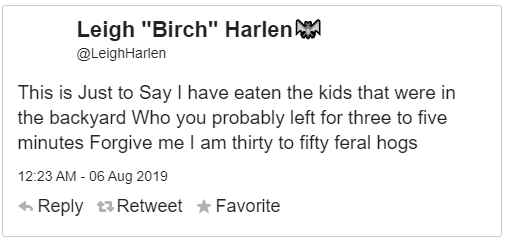
It can be hard to feel like there’s a pressure to stay up to date on the latest trends going around social media, but as stated in my chapter, “Taking memes and online jokes and bringing them into the classroom is one way to make not only the library space feel accessible but the concepts being taught feel accessible. Students should not be scared to follow their interests, and to allow those interests to inform their research” (Carpenter, p. 142).

This tweet exemplifies the metaliteracy of memes – almost impossible to understand the joke unless you were aware of the 30-50 feral hog meme on Twitter in 2019, and familiar with “This Is Just To Say” by William Carlos Williams, and how it is used as a meme format on the social media platform. Multiple layers of meaning all at once give depth to the meme, layers to understanding, and cultural context.

Carpenter, Beth (2024). The Metaliteracy of Memes: Having Students Track the Flow of Information. In Aird and Mackey (Eds.), Teaching Digital Storytelling: Inspiring Voices through Online Narratives. (pp. 129-148). Rowman & Littlefield.

Featured Chapter: Typhoid of 1843 on StoryMaps: Collaborating to Tell Local History

by Claire S. Schen, Ph.D.

We were inspired to share our story of an “unusual, motivational, and challenging” learning experience with students on “a new topic, new content areas, and a new digital platform.” (177) “We” – a faculty member and two faculty librarians (at the time) at the University at Buffalo (SUNY) – worked together to build an archive for the learners that drew upon specialized collections at UB in the history of medicine, maps, and local history. Students also moved beyond the archive of topics and sources assembled ahead of the project. The digital story focused on the devastating typhoid outbreak in 1843 in the small town of Boston, NY that was studied by Buffalo physician and one of the founders of the medical college which became UB, Austin Flint, MD. Flint’s work on this waterborne illness was cited by John Snow in his more famous work on cholera in London around the Broad Street pump.

Typhoid in North Boston, NY, 1843: Small Town, Big Story

We were motivated to share our working collaboration because we saw how the month-long class project “inspired learners and helped them to be creative producers of digital information.” (169) Hands-on experience lessened hesitancy about digital platforms and made the original research less overwhelming.

“Research can be a struggle, and with grades riding on outcomes learners can shy away from creative, even risky struggle. A collaborative project provided a way to share the risk and struggle – and to celebrate the end result. The digital storytelling project developed research skills and modeled ethical research that students will be able to apply on future projects, whether in traditional research formats or through digital storytelling.” (184)

-Plassche (nee Falkowski), Schen, and Mages (2024)

Library sessions helped the students learn more about the work of librarians and the digital platforms and research collections and methods. The critical analysis of primary sources led to discussion about class and poverty in a rural setting and the privileged position of expert medical practitioners, like the allopathic doctors who distrusted the botanical or Thomsonian practitioners operating in the area. Online primary sources, like the censuses of the nineteenth century, and crowd-sourced resources such as Find a Grave became important tools for the students as well. Here they could see the benefits of digitized materials, including digitized original pages of the census, and the shortcomings of machine-reading of nineteenth-century handwriting. Ultimately, students created an ArcGIS StoryMaps of their findings. In turn, we saw the fulfillment of metaliteracy goals through the experience: actively evaluate content alongside one’s own biases, engage with intellectual property ethically and responsibly, to produce and share information in collaborative and participatory environments, and to develop learning strategies for lifelong personal and professional growth.

Plassche, K.A., Schen, C.S., and Mages, K.C. (2024). Typhoid of 1843 on StoryMaps: Collaborating to Tell Local History. In Aird and Mackey (Eds.), Teaching Digital Storytelling: Inspiring Voices through Online Narratives. (pp. 189-208). Rowman & Littlefield.

Authors in the City Event Features Digital Storytelling Book

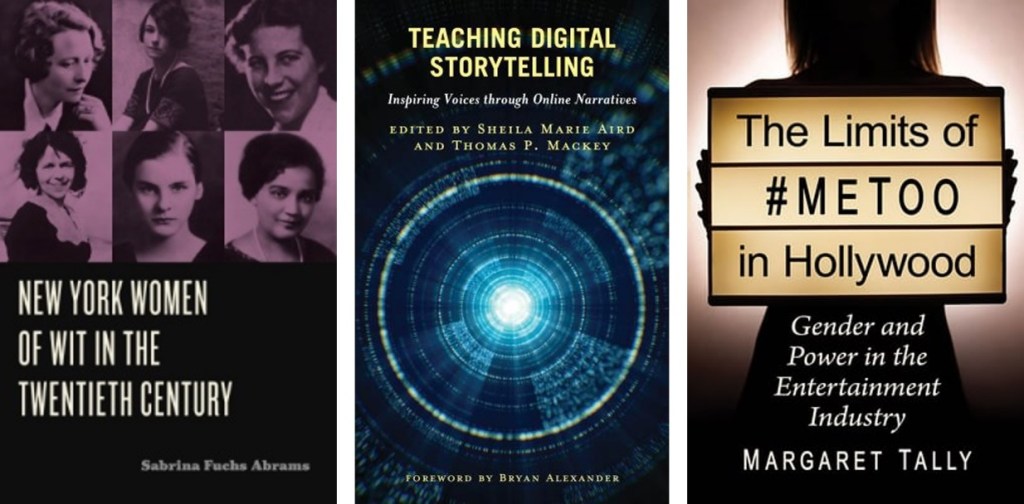
The new book Teaching Digital Storytelling: Inspiring Voices through Online Narratives by Drs. Sheila Aird and Tom Mackey will be featured at a special Authors in the City event hosted by Empire State University. If you are in the city or online Tuesday, April 30, 2024 at 4:30pm check out this event! Tom Mackey will join his SUNY Empire colleagues Sabrina Fuchs Abrams and Margaret (Peggy) Tally who will discuss their new books as well. Here are the details from SUNY Empire:

One evening. Three authors. Three great books.

Please join us for an in-person event celebrating and discussing the latest books by members of the Empire State University community.

Date: Tuesday, April 30, 2024

Time: 4:30 – 6:30 p.m. 

Location: 4 Park Avenue (Mezzanine) in Manhattan

Participating authors are Professor Sabrina Fuchs Abrams, Professor Tom Mackey, and SUNY Distinguished Teaching Professor Margaret (Peggy) Tally. 

The event is being sponsored by SUNY Empire’s School of Graduate Studies and School of Arts and Humanities. Light refreshments will be served. For those who cannot attend in person, the event will be live-streamed (Join the Event Virtually).

We look forward to having you attend the event!

Authors

Sabrina Fuchs Abrams, Professor of English in the Master of Arts in Liberal Studies (MALS) program in the School for Graduate Studies at SUNY Empire, will present on her latest book, “New York Women of Wit in the Twentieth Century” (Penn State U Press, 2023). This book looks at the foremothers of women’s humor, who use satire, irony, and wit as an indirect form of social protest in challenging traditional gender roles and social hierarchies. It situates these writers in the context of New York City in the interwar period, which enabled these pioneering women of wit to set the stage for future generations of smart, sassy, sultry feminist humorists of today.

Thomas P. Mackey, Professor in the Department of Arts and Media, School of Arts and Humanities will present on his latest book with European Director of International Programs and Associate Professor Sheila Aird, “Teaching Digital Storytelling: Inspiring Voices through Online Narratives” (Rowman & Littlefield, 2024). This edited volume emerged from their international exchange to teach digital storytelling and includes chapters by educators from around the world and a foreword by futurist and digital storytelling pioneer Bryan Alexander. The book presents innovative case studies from educators in South Africa, Czech Republic and the United States about the theory and practice of teaching digital storytelling while applying literacy frameworks such as metaliteracy, information literacy, visual literacy and multiliteracies.

Margaret (Peggy) Tally, SUNY Distinguished Teaching Professor at the School for Graduate Studies, will present on her book, “The Limits of #MeToo in Hollywood: Gender and Power in the Entertainment Industry” (McFarland & Company). In October 2017, actress Alyssa Milano sparked the #MeToo movement. The ensuing protests quickly encompassed far more than Harvey Weinstein and the entertainment industry. They expressed women’s outrage at male workplace behavior in every sector and social class and even helped elect a new generation of women leaders in 2018. But what has been the effect of #MeToo in the entertainment industry itself? This book traces the movement’s influence on the stories being told, changing representations of women’s lives and bodies, and the slow changes among the producers who shape the stories.

Featured Chapter: Voicing Agency through Ethnography

by Muchativugwa Liberty Hove

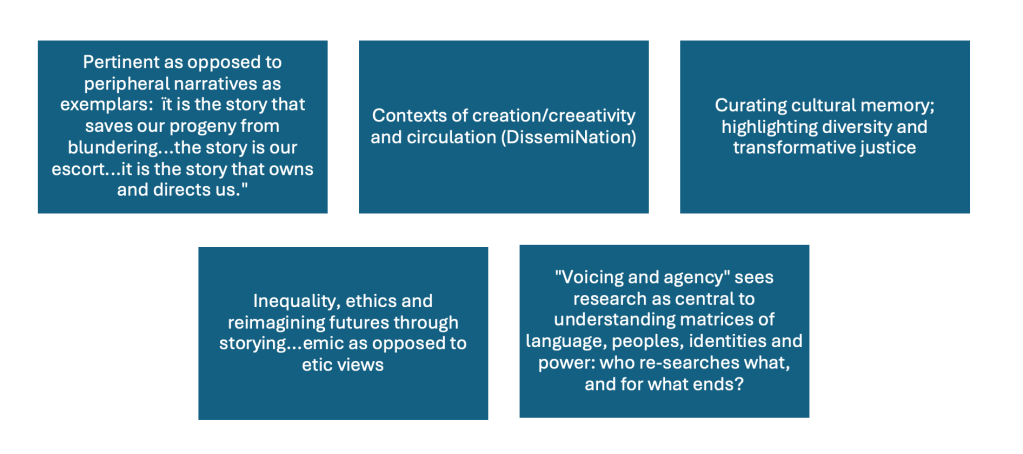
“Voicing agency through ethnography” evolved from documentary viewing, reading and writing about Dovie and Sissay, agents/voices who had experienced traumatic colonial assault on their identities and processes of becoming (https://vimeo.com/193972360). In the demographic and cultural crises prompted by this trauma, I strove to engage the agents/voices as they revived and re-invented politically contested and historically unfinished, culturally nuanced interpretations that approximated styles of proximation and distancing. Each of the autoethnographies questioned: who has the author/ity to speak for a group’s being, identity or authenticity? What narrative strategies privilege development, loss and innovation to account for oppositional narratives? In this predicament of autoethnography, different histories must be laminated to local futures.

As noted in my chapter:

In operationalizing critical theory, this chapter contends that multiliteracies is a specific pedagogical framework for rethinking the future of storytelling, language, and literature education within the context of major social and technological changes. The global and glocal compel communication in an ever-evolving English language, where technological, linguistic, and cultural change demand new and versatile forms of global citizenship. Dovie’s narrative illustrates that there are multiple literacies produced through autoethnography and digital storytelling. Multiliteracies assume multiple worlds connected in multiple ways, deliberately fashioned to inaugurate new identities and agency (Hove, 91).

Muchativugwa Liberty Hove

This diagram literally condenses my chapter into a conceptual flow map:

-Muchativugwa Liberty Hove (2024) ORCID: https://orcid.org/0000-0002-6021-4639.

Hove, M.L. (2024). Voicing Agency through Ethnography. In Aird and Mackey (Eds.), Teaching Digital Storytelling: Inspiring Voices through Online Narratives. (pp. 91-106). Rowman & Littlefield.