Authors in the City Event Features Digital Storytelling Book

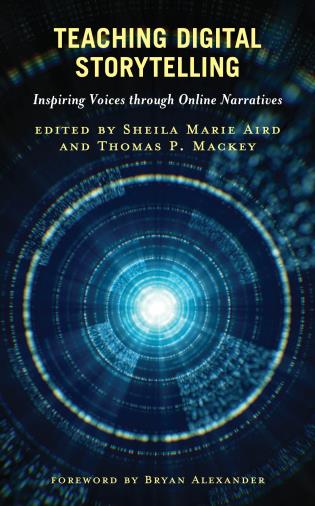
The new book Teaching Digital Storytelling: Inspiring Voices through Online Narratives by Drs. Sheila Aird and Tom Mackey will be featured at a special Authors in the City event hosted by Empire State University. If you are in the city or online Tuesday, April 30, 2024 at 4:30pm check out this event! Tom Mackey will join his SUNY Empire colleagues Sabrina Fuchs Abrams and Margaret (Peggy) Tally who will discuss their new books as well. Here are the details from SUNY Empire:

One evening. Three authors. Three great books.

Please join us for an in-person event celebrating and discussing the latest books by members of the Empire State University community.

Date: Tuesday, April 30, 2024

Time: 4:30 – 6:30 p.m. 

Location: 4 Park Avenue (Mezzanine) in Manhattan

Participating authors are Professor Sabrina Fuchs Abrams, Professor Tom Mackey, and SUNY Distinguished Teaching Professor Margaret (Peggy) Tally. 

The event is being sponsored by SUNY Empire’s School of Graduate Studies and School of Arts and Humanities. Light refreshments will be served. For those who cannot attend in person, the event will be live-streamed (Join the Event Virtually).

We look forward to having you attend the event!
Authors

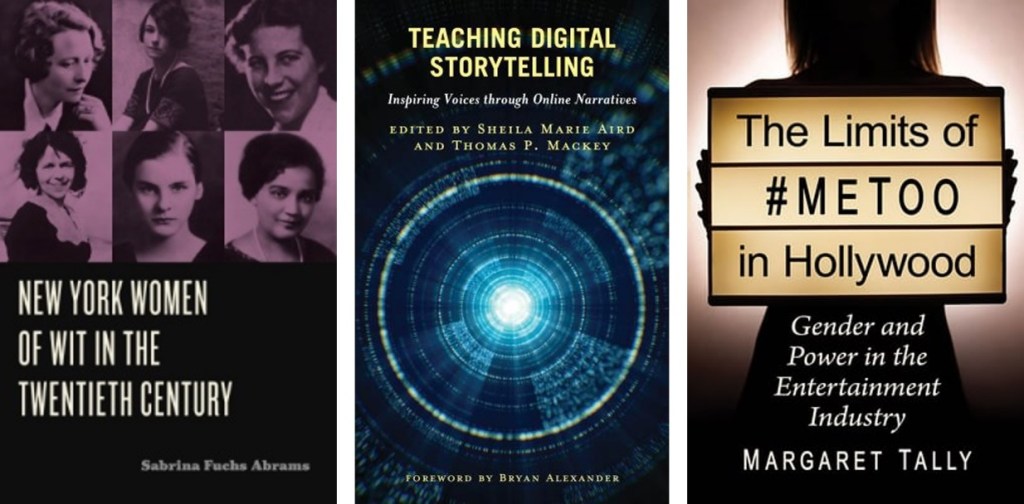
Sabrina Fuchs Abrams, Professor of English in the Master of Arts in Liberal Studies (MALS) program in the School for Graduate Studies at SUNY Empire, will present on her latest book, “New York Women of Wit in the Twentieth Century” (Penn State U Press, 2023). This book looks at the foremothers of women’s humor, who use satire, irony, and wit as an indirect form of social protest in challenging traditional gender roles and social hierarchies. It situates these writers in the context of New York City in the interwar period, which enabled these pioneering women of wit to set the stage for future generations of smart, sassy, sultry feminist humorists of today.

Thomas P. Mackey, Professor in the Department of Arts and Media, School of Arts and Humanities will present on his latest book with European Director of International Programs and Associate Professor Sheila Aird, “Teaching Digital Storytelling: Inspiring Voices through Online Narratives” (Rowman & Littlefield, 2024). This edited volume emerged from their international exchange to teach digital storytelling and includes chapters by educators from around the world and a foreword by futurist and digital storytelling pioneer Bryan Alexander. The book presents innovative case studies from educators in South Africa, Czech Republic and the United States about the theory and practice of teaching digital storytelling while applying literacy frameworks such as metaliteracy, information literacy, visual literacy and multiliteracies.

Margaret (Peggy) Tally, SUNY Distinguished Teaching Professor at the School for Graduate Studies, will present on her book, “The Limits of #MeToo in Hollywood: Gender and Power in the Entertainment Industry” (McFarland & Company). In October 2017, actress Alyssa Milano sparked the #MeToo movement. The ensuing protests quickly encompassed far more than Harvey Weinstein and the entertainment industry. They expressed women’s outrage at male workplace behavior in every sector and social class and even helped elect a new generation of women leaders in 2018. But what has been the effect of #MeToo in the entertainment industry itself? This book traces the movement’s influence on the stories being told, changing representations of women’s lives and bodies, and the slow changes among the producers who shape the stories.
Featured Chapter: Voicing Agency through Ethnography

by Muchativugwa Liberty Hove

“Voicing agency through ethnography” evolved from documentary viewing, reading and writing about Dovie and Sissay, agents/voices who had experienced traumatic colonial assault on their identities and processes of becoming (https://vimeo.com/193972360). In the demographic and cultural crises prompted by this trauma, I strove to engage the agents/voices as they revived and re-invented politically contested and historically unfinished, culturally nuanced interpretations that approximated styles of proximation and distancing. Each of the autoethnographies questioned: who has the author/ity to speak for a group’s being, identity or authenticity? What narrative strategies privilege development, loss and innovation to account for oppositional narratives? In this predicament of autoethnography, different histories must be laminated to local futures.

As noted in my chapter:

In operationalizing critical theory, this chapter contends that multiliteracies is a specific pedagogical framework for rethinking the future of storytelling, language, and literature education within the context of major social and technological changes. The global and glocal compel communication in an ever-evolving English language, where technological, linguistic, and cultural change demand new and versatile forms of global citizenship. Dovie’s narrative illustrates that there are multiple literacies produced through autoethnography and digital storytelling. Multiliteracies assume multiple worlds connected in multiple ways, deliberately fashioned to inaugurate new identities and agency (Hove, 91).

Muchativugwa Liberty Hove

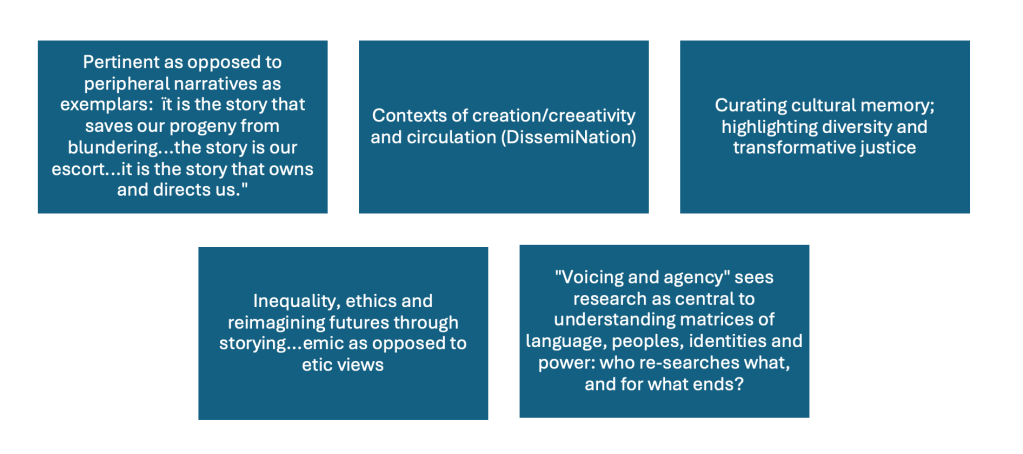
This diagram literally condenses my chapter into a conceptual flow map:

-Muchativugwa Liberty Hove (2024) ORCID: https://orcid.org/0000-0002-6021-4639.

Hove, M.L. (2024). Voicing Agency through Ethnography. In Aird and Mackey (Eds.), Teaching Digital Storytelling: Inspiring Voices through Online Narratives. (pp. 91-106). Rowman & Littlefield.

Teaching with Digital Storytelling: Inspiring Voices Through Online Narratives

Dr. Sheila Marie Aird and Dr. Thomas P. Mackey just published a new book Teaching Digital Storytelling: Inspiring Voices Through Online Narratives for Rowman & Littlefield. This book is featured as part of Trudi Jacobson’s Innovations in Information Literacy Series. Drs. Aird and Mackey worked with an outstanding team of authors from other SUNY schools, Temple University, and universities in South Africa. All of the chapters present innovative case studies about teaching with digital storytelling by applying information literacy, metaliteracy, and visual literacy. The new book features a Foreword written by futurist and digital storytelling pioneer Dr. Bryan Alexander.

This book project emerged from the collaboration initiated by Drs. Aird and Mackey to design and teach a fully online course in Digital Storytelling that brings together Empire State University students studying in Prague, Czech Republic and the United States. This course embeds key aspects of the metaliteracy framework and integrates resources and learning objects published at the metaliteracy.org blog. The editors wrote the framing chapter about this case study Metaliteracy and Global Digital Storytelling: Building Shared Learning Communities. This new chapter builds on their previous publication for Open Praxis Integrating Metaliteracy into the Design of a Collaborative Online International Learning (COIL) Course in Digital Storytelling.

According to the book description:

This book presents the stories of educators who through digital storytelling inspire students from diverse communities to construct their empowering digital narratives. Educators from a wide range of disciplines present innovative case studies of teaching digital storytelling through the lens of personal narratives, metaliteracy, and information literacy. They describe how teaching students to tell their personal digital stories prepares them as learners who are reflective while playing active learner roles such as producer, publisher, and collaborator. 

https://rowman.com/ISBN/9781538172919/Teaching-Digital-Storytelling-Inspiring-Voices-through-Online-Narratives

We congratulate all of our chapter authors and welcome you to read the book and let us know about your own digital storytelling journey!

Sheila and Tom